The dominance of hard techno in Europe: why the genre will explode in 2026
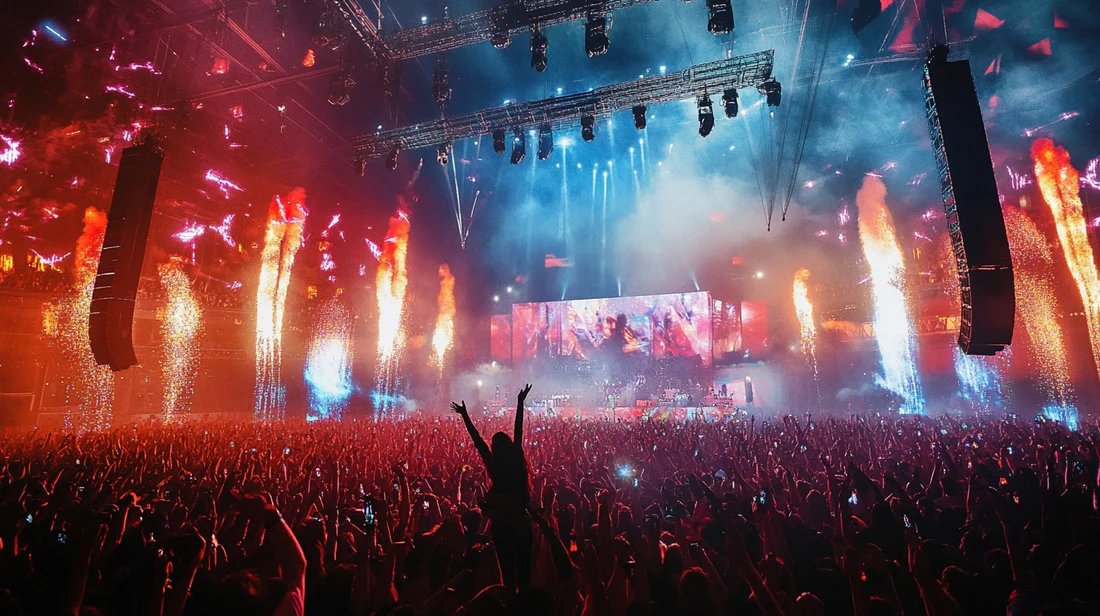
In just a few years, hard techno has gone from an underground subgenre to one of the most dominant movements on the European electronic music scene. Now present at the biggest festivals, fueled by social media and a new generation of clubbers, the genre is establishing itself as a true cultural phenomenon.
A post-Covid acceleration and a new generation of clubbers
The explosion of hard techno is largely explained by the post-pandemic context. According to several analyses of the electronic music scene, the resumption of live events created a strong demand for more intense, fast-paced, and immersive experiences.
With high BPMs (often between 140 and 160), industrial sounds, and a very distinctive aesthetic, hard techno perfectly fulfills this desire for a "physical return" to partying.
Massive events like those organized by collectives such as Blackworks in Spain have played a key role in this expansion, attracting tens of thousands of people and helping to structure a truly international scene.
Artists and collectives who have industrialized the scene
One of the main drivers of this explosion is the rapid professionalization of the genre. Artists like Sara Landry, Nico Moreno, and Kobosil now regularly headline major European techno events, helping to establish hard techno on the biggest stages.
At the same time, specialized collectives and labels have facilitated this rise to prominence, with events filling entire arenas and dedicated festivals constantly expanding.
Spain, the epicenter of the new wave
While Germany and the Netherlands have historically been pillars of European techno, Spain has established itself as a nerve center of modern hard techno.
Madrid, in particular, has become a strategic hub with large-scale events, where the new generation of ravers (often aged 18 to 25) gathers around a highly codified aesthetic: black, masks, raw energy, and a strong social media presence.
A scene amplified by TikTok and visual culture
Hard techno was also one of the first techno genres to be so heavily promoted by social media. Snippets of ultra-fast sets, aggressive drops, and the highly visual aesthetic of events circulated widely on TikTok and Instagram, accelerating its spread to a younger audience.
This virality helped propel the genre beyond its traditional spaces, establishing it as a mainstream and accessible cultural phenomenon.
A scene in full transformation
Historically, hard techno's roots lie in the evolution of hardcore, schranz, and certain forms of industrial techno.
But its current version is a departure from these roots; it's more structured, more event-driven, and above all, much more visible. It's no longer just an underground sound, but a veritable, expanding live industry.
Hard techno is no longer confined to the fringes of the electronic music scene: it has become one of the main driving forces behind major European events.
Between the post-Covid explosion, the structuring of collectives, the power of social media, and the demand for extreme experiences, the genre has established itself as one of the most influential movements in contemporary club culture.
05/06/2026
écrit par la rédaction